















































































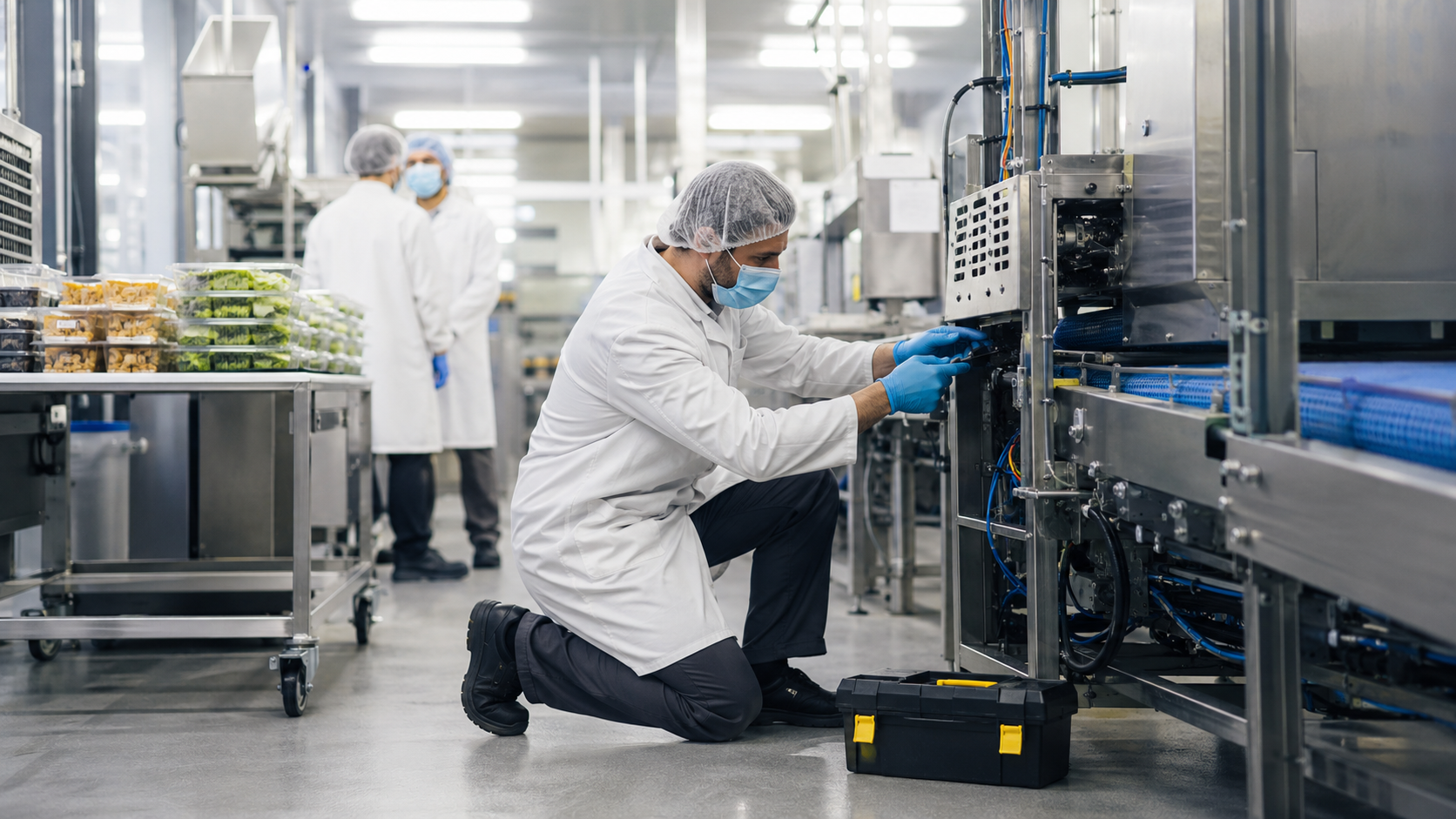
Running a successful food production facility or commercial kitchen requires an unwavering commitment to safety. From the moment raw ingredients arrive at the loading dock to the final packaging stage, operations must adhere to strict hygiene protocols. While most facility managers excel at managing biological hazards, mechanical maintenance is an equally critical component of overall food safety that is sometimes overlooked. A failure in equipment upkeep can compromise an entire production run, leading to devastating consequences for both consumers and the business. As industrial kitchens become more automated, the need for comprehensive maintenance strategies has never been greater.
The Hidden Dangers of Machinery Maintenance
When evaluating food safety risks, managers naturally focus on biological threats like temperature control and cross-contamination. Facility operators must be constantly vigilant against common food storage violations in commercial kitchens, but they must apply that exact same rigor to their mechanical systems. A recent benchmark report on foreign material contamination revealed that nearly half of surveyed food industry professionals identified equipment failure as their most common source of physical contamination.
Degraded machinery components do not just halt production. They pose severe public health risks. In 2025, foreign material contamination was the leading cause of USDA-regulated food product recalls. These alarming statistics highlight why proactive equipment maintenance is not merely a basic operational task, but a strict necessity to prevent physical and chemical hazards from reaching the consumer. Regular inspections ensure that worn bearings, fraying belts, and deteriorating seals are replaced long before they can contaminate a batch of food.
Regulatory Frameworks and Chemical Safety
Federal regulations legally demand that food producers maintain documented, preventive maintenance programs for all food-contact machinery. The Food Safety Modernization Act classifies facility upkeep as a proactive control measure under HACCP methodologies. This strict oversight of industrial chemicals means many plant managers partner with food-safe lubrication specialists to keep processing equipment running smoothly without risking regulatory violations.
For instance, the FDA explicitly outlines safe ingredients and limitations for lubricants with incidental food contact, mandating that components such as mineral oil cannot exceed 10 parts per million in food addition. Ignoring these stringent chemical limits can lead to severe regulatory penalties and catastrophic cross-contamination events. Compliance requires detailed tracking, consistent monitoring, and the exclusive use of approved, non-toxic maintenance compounds in all sensitive production zones.
Selecting the Right Maintenance Components
Ensuring regulatory compliance means understanding the distinct categories of industrial compounds. The National Sanitation Foundation manages the White Book, which serves as the definitive global registry of approved substances for commercial food environments. NSF H1 registered lubricants are specifically formulated for incidental contact. They are verified safe for use on machinery where trace amounts might occasionally be exposed to food products without violating federal limits.

In stark contrast, H2 formulas are strictly restricted to equipment areas with absolutely zero possibility of food contact. Navigating these safety categories can be incredibly complex, which is why operators must be precise when auditing their machinery and supplying the correct fluids. These specialized products do more than prevent chemical cross-contamination. They are uniquely engineered to resist emulsification and chemical degradation during the harsh, high-pressure washdowns required in commercial food manufacturing environments.
Essential Steps for Proactive Facility Upkeep
A food recall costs an average of ten million dollars in direct costs alone, excluding long-term brand damage. To protect against these staggering financial impacts, businesses must standardize their mechanical upkeep. Implementing a modern maintenance strategy involves several key practices:
- Upgrade to Predictive Maintenance: Facilities utilizing automated food processing systems are increasingly integrating predictive sensors to monitor equipment vibration and temperature, transforming raw mechanical data into a verified safety audit trail.
- Maintain Complete Documentation: With upcoming regulatory deadlines like the FDA Food Traceability Rule enforcing a July 2028 compliance date, facilities must supply comprehensive contamination tracking records within 24 hours of an official request. Currently, over 60 percent of facilities struggle to produce complete preventive maintenance records on demand.
- Prioritize ISO 21469 Certification: When sourcing maintenance fluids, look for products that meet this advanced global hygiene certification. It evaluates a product’s entire lifecycle, from safe formulation to sanitary packaging and handling.
- Train Staff on Chemical Segregation: Ensure that maintenance personnel understand the critical differences between safe and unsafe compounds, keeping non-food-grade chemicals strictly isolated from active production zones.
Protecting a food business requires looking beyond the obvious biological risks to secure the mechanical foundation of the facility. By strictly adhering to federal chemical limits, maintaining meticulous audit trails, and using the proper maintenance products, production plants and commercial kitchens can safeguard both their customers and their operational longevity. In an industry where a single mistake can permanently damage a brand’s reputation, investing in rigorous equipment upkeep is one of the most effective ways to guarantee long-term success.