










































































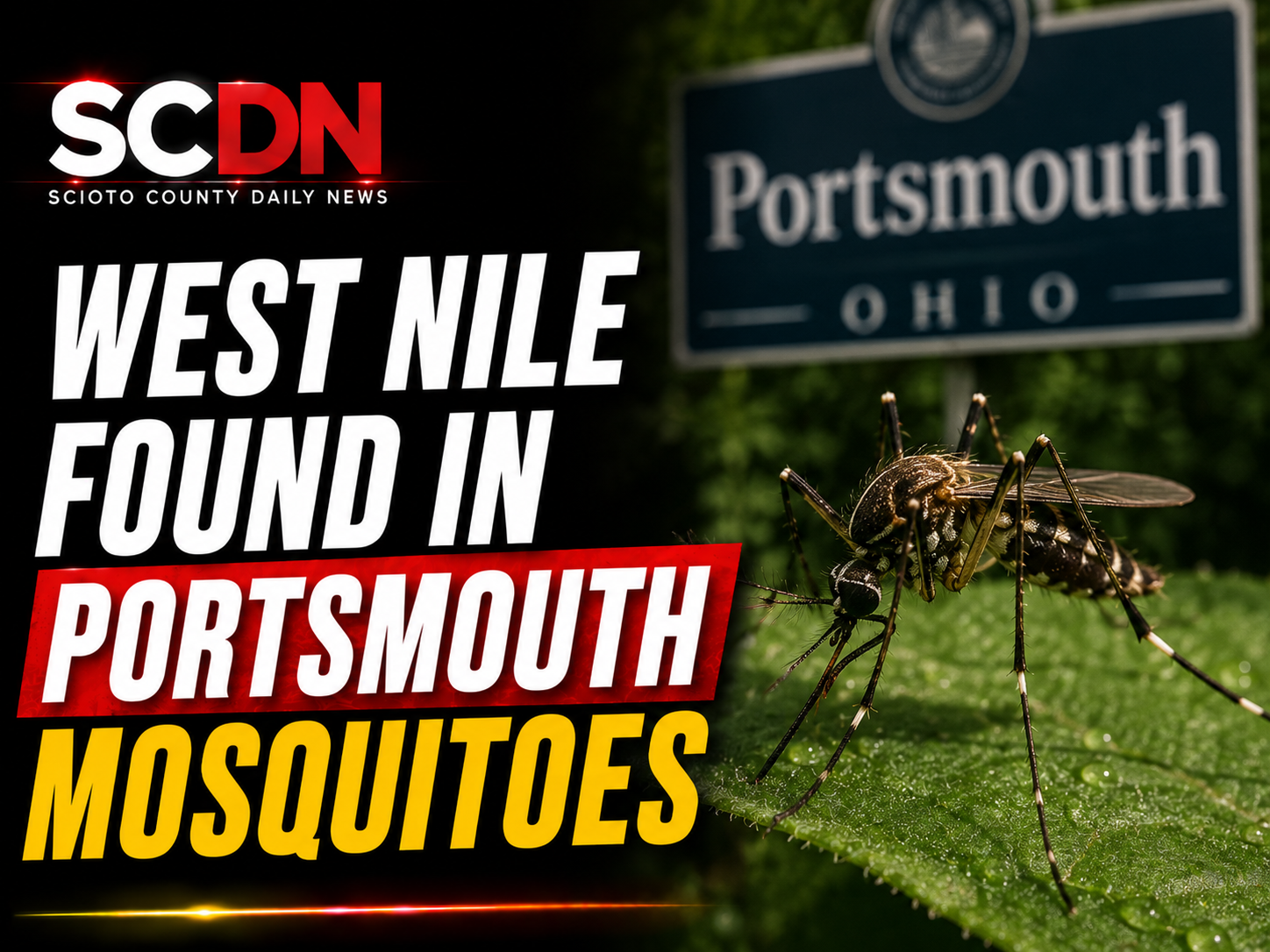
Portsmouth health officials are warning residents after routine mosquito testing found positive mosquito pools in parts of the city.
The Portsmouth City Health Department said positive mosquito pools were identified in the central and eastern portions of Portsmouth, including areas near Charles Street, Brown Street, and Gallia Street.
That does not mean a human case of West Nile virus has been found.

It does mean the virus has been detected in the local mosquito population, and residents should take precautions to avoid bites.
West Nile virus is spread to people through the bite of an infected mosquito. According to the CDC, it is the leading cause of mosquito-borne disease in the continental United States.
Most people infected with West Nile never develop symptoms. The CDC says about 1 in 5 people infected may develop symptoms such as fever, headache, body aches, joint pain, vomiting, diarrhea, or rash.
A small number of people can develop serious illness affecting the nervous system, including inflammation of the brain or surrounding tissues. Older adults and people with weakened immune systems are at higher risk for severe illness.
There is no vaccine or specific medicine to prevent West Nile virus in people, so the best protection is avoiding mosquito bites.
The city plans to conduct mosquito-control treatment in the affected areas on Thursday, Aug. 20, weather permitting.
The treatment is meant to reduce the adult mosquito population and lower the potential risk of West Nile virus spreading.
Residents in the treatment areas should follow any instructions from Portsmouth City Health Department personnel. People may also choose to stay indoors while treatment is taking place.
As an extra precaution, residents can bring in or cover outdoor toys, pet dishes, and food-related items before treatment.
If weather prevents the treatment, it will be rescheduled for the next appropriate date.
Health officials are also reminding residents to “Fight the Bite.”
Use EPA-registered insect repellent, wear long sleeves and long pants when practical, and try to limit outdoor activity at dusk and dawn, when mosquitoes are often most active.
Residents should also check window and door screens and remove standing water at least once a week from buckets, flowerpots, gutters, birdbaths, pool covers, pet dishes, discarded tires, and other containers.
Swimming pools should be properly maintained and chlorinated.
Residents can also report areas with persistent standing water or heavy mosquito activity to the Portsmouth City Health Department.