













































































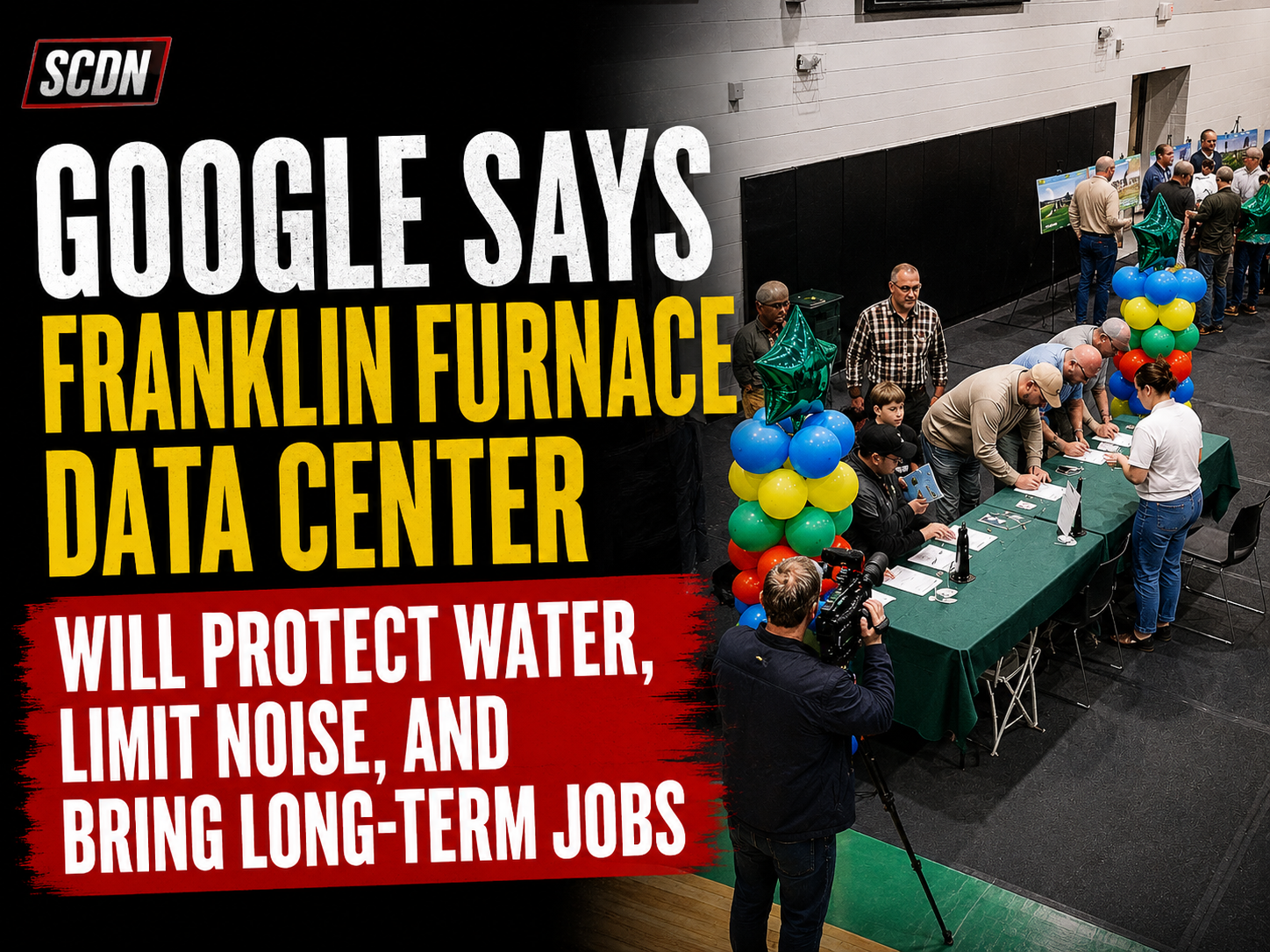
Google officials are continuing to offer new details and assurances about the company’s planned “Project Dazzler” data center campus in Franklin Furnace following last week’s public open house at Green High School.
The event gave residents a chance to speak directly with Google engineers and project leaders about concerns involving water usage, electric demand, traffic, noise, and jobs. Google representatives also praised local vendors and businesses that helped support and organize the event, saying they appreciated the warm reception from the community.
Commissioners have repeatedly said they supported the project largely because of Google’s reputation and long-term track record in other Ohio communities.
“Our decision was based on the partner, not the project,” Commissioner Scottie Powell said during a recent commissioners meeting.
Google Says Water Will Be Protected
One of the biggest concerns raised by residents has been whether the proposed data center could impact the Ohio River or local water supplies.
Google representatives said the company does not discharge industrial wastewater directly into the environment at its Ohio facilities. Instead, wastewater is routed through public sewer systems for treatment.
Company officials also explained that engineers are designing the Franklin Furnace campus with stormwater retention and detention systems to prevent runoff problems and minimize impacts to neighboring properties and waterways.
Powell added that Google has been working through wetland mitigation plans tied to the property and appears focused on preserving environmentally sensitive areas wherever possible.
Google officials also said the company plans to leave existing tree lines around portions of the campus to help shield neighboring homes and preserve wildlife habitat.
Company Says Residents Shouldn’t Pay for the Power Demand
Another major concern has been electricity usage and whether the project could drive up electric rates.
Google officials said the company will pay the full cost of the electricity required to operate the campus as well as infrastructure improvements needed from AEP Ohio.
That issue has become a statewide topic as Ohio sees rapid growth in data center construction tied to artificial intelligence and cloud computing.
Google also pointed to its broader energy initiatives in Ohio, including programs aimed at improving energy efficiency and reducing strain on the electric grid.
Focus on Local Hiring and Workforce Training
Google representatives stressed that they want local residents to benefit from the project.
The company said it always makes an effort to hire locally and encouraged residents to monitor Google’s data center career pages for future openings.
Google also highlighted its Skilled Trades and Readiness (STAR) Program, designed to help communities prepare workers for technical and skilled trade careers tied to data center operations.
Officials said more details about Ohio-specific workforce programs are expected later.
The company also says it regularly partners with schools and community organizations to support STEM education and digital literacy initiatives in areas where it builds campuses.
Construction Timeline Extends Into 2029
According to Google’s public project materials, the campus is expected to be built in multiple phases stretching over several years.
Current plans show:
- Construction setup beginning in 2026
- Site work continuing through 2026 and 2027
- Foundations and major building construction in 2027
- Interior buildout and electrical infrastructure work continuing through 2028 and 2029
The project also includes a new electrical substation being constructed by AEP.
Still a Divisive Project
Despite Google’s outreach efforts, the project remains controversial.
Some residents continue to worry about:
- Long-term environmental impacts
- Water consumption
- Increased industrial development in Green Township
- Changes to the rural character of Franklin Furnace
- Transparency during negotiations with commissioners
Supporters argue the project could bring hundreds of jobs, years of construction work, and economic investment to a county that has struggled for decades to attract large-scale development.
Google officials say they understand those concerns and are continuing to work with local leaders and residents as the project moves through the permitting and planning process.

Google Answers Tough Questions from SCDN
Google says the long-term tax reality of the proposed data center is built around “a cycle of recurring investment,” not a one-time construction boom. In response to questions from SCDN, Molly Kocour Boyle, Regional Head of Data Center Public Affairs for Google, said the company views its campuses as “long-term partnerships in local economic development” because the technology inside the facilities must constantly be replaced and upgraded.
According to Boyle, expensive infrastructure such as servers and networking equipment typically has a lifespan of just “3–6 years” before it must be refreshed to keep pace with advancing technology. That recurring replacement cycle, she said, helps ensure the site “continues to provide consistent tax benefits and economic activity for the county throughout its 20+ year lifespan,” while also supporting “high-wage operational jobs” and generating broader economic benefits for local businesses and services.