








































































The owners of the old Buckeye Terminal in Sciotoville stopped returning the county Land Bank’s calls after Portsmouth officials talked about acquiring the property. Now the city is considering a new approach that could finally get their attention.
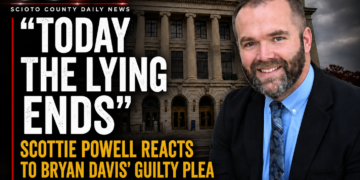
The Scioto County Land Bank was once in talks about acquiring the old Buckeye petroleum terminal in Sciotoville, but Commissioner Scottie Powell says the owners stopped returning calls after an earlier Portsmouth City Council discussed taking over the property.
Now, with the city considering a new plan to investigate the former terminal and explore environmental cleanup, Powell is questioning whether officials can make progress without first getting the owners back to the table.
“They quit responding to phone calls after the previous City Council said they were going to acquire the property when it wasn’t even up for sale,” Powell said.
His comments came in response to a question about the possibility of the Land Bank acquiring the property, not a general objection to investigating environmental concerns.
And while Powell has reservations about the city’s approach, the proposed legislation might accomplish something the Land Bank hasn’t been able to do: get the property’s owners to start paying attention and talking again.
That’s one possible outcome, although there’s no indication yet that the owners are prepared to resume discussions.
The issue is scheduled for Monday’s Portsmouth City Manager’s Conference on October 26. Officials will consider whether to move two proposed measures forward for a formal City Council vote.
Land Bank Discussions Came to a Halt
Powell said the Scioto County Land Bank had previously explored working with the owners of the former Buckeye Sciotoville Terminal.
“At one point they were talking to the Land Bank,” Powell said. “The Buckeye Terminal owners are no longer responding to the Land Bank.”
The Land Bank helps return vacant, abandoned and troubled properties to productive use. That can include acquiring properties, arranging demolition or cleanup and preparing sites for redevelopment.
Powell said the county would still be willing to help if the owners wanted to work toward a solution.
“If they want to do something, we’d be happy to help,” he said. “They have to be willing to get rid of it.”
He also believes the property still has value, which could make its owners reluctant to give it up.
Powell traced the breakdown in communication to statements made by a previous City Council about acquiring the terminal, even though the property wasn’t being offered for sale.
He questioned whether the latest proposal would get any further without renewed cooperation.
“Unless they’ve heard something from Buckeye Terminal that we haven’t heard, I don’t know if it’s wise to go down that path,” Powell said.
A Long History of Trying to Do Something With the Terminal
The former petroleum terminal has been a topic of discussion for years.
In 2022, Portsmouth City Council approved a resolution expressing interest in working with Buckeye Partners to find a new use for the property.
At that time, Buckeye Partners publicly acknowledged owning the terminal since 2011 and said it was open to discussing its future. The company also said it had no definite plans for the property.
In 2023, Councilman Dennis Packard continued pushing for action. The city had received permission to conduct environmental air sampling, which did not identify contamination in those tests. Further investigation involving soil sampling was discussed, but questions remained about who would pay for it. <Cite ref=”turn213687search1″/>
Now Powell says the Land Bank’s own efforts to communicate with the owners have stalled.
That history helps explain his concern about the city’s latest proposal.
Could the New Plan Get the Owners Talking Again?
There’s another way to look at the proposed legislation.
Even if the city cannot immediately acquire the property or begin environmental testing, a formal process involving written requests, regulatory agencies and public progress reports could bring renewed attention to the terminal.
It might also encourage the owners to reopen discussions rather than leave questions about the property unanswered.
That’s a possibility, not an outcome the city can guarantee.
In fact, the proposed resolution specifically anticipates that the owners might not respond.
It would require the city to document its attempts to make contact and identify other lawful steps if cooperation isn’t forthcoming.
Those could include asking Ohio EPA or other regulatory agencies to review the site’s history and determine whether further investigation is warranted.
The city could pursue those requests without first acquiring the property, although access for environmental testing would still require consent or another lawful authorization.

Powell Raises Questions About Environmental Testing
Powell said he believes a Phase I environmental assessment was previously conducted at the terminal.
A Phase I assessment generally involves reviewing property records, historical uses and other information to identify potential environmental concerns.
A Phase II assessment is more involved and can include testing soil or groundwater to determine whether contamination is present.
Powell expressed concern about the possible cleanup obligations associated with further testing.
“The problem is if you do a Phase II, the owner is responsible to remediate,” he said.
Actual cleanup liability depends on environmental law and the circumstances of any contamination; testing alone does not automatically establish liability.
Still, Powell believes the potential costs and responsibilities are an important reason the owners might be reluctant to proceed.
He said several steps would need to be completed before the Land Bank could realistically revisit the possibility of acquiring the property.
What Portsmouth Is Proposing
Sixth Ward Councilman Dennis Packard has submitted two related measures.
The first would create a citywide Brownfield Remediation Program to identify and investigate potentially contaminated industrial properties.
The program would establish a coordinator responsible for gathering records, communicating with property owners, contacting environmental agencies, identifying possible cleanup funding and reporting progress to City Council.
The second measure would focus specifically on the Buckeye Sciotoville Terminal.
It would establish a timetable for city officials to investigate the property and report their findings.
Under the proposed resolution, officials would have:
- 30 days to verify ownership and property boundaries and begin contacting the owners.
- 60 days to gather environmental records, contact regulatory agencies and review potential concerns involving the Ohio River and the city’s drinking-water supply.
- 90 days to develop an environmental investigation plan and identify possible funding.
- 180 days to report what has been accomplished, what obstacles remain and what should happen next.
Those deadlines would govern city actions and reports. They would not require the owners to complete a cleanup within six months.
The proposals also would not authorize the city to enter private property without permission or other lawful authority.
Why the Ohio River Is Part of the Discussion
The terminal’s location along the Ohio River is one of the reasons Packard wants the property investigated.
Portsmouth draws its public drinking water from the river, and the proposed legislation calls for reviewing whether the terminal’s former petroleum operations could present environmental concerns.
That could include examining historical spills, tanks, pipelines, soil conditions and potential pathways for contaminants to reach the water.
However, the proposed measures do not establish that contamination exists or that Portsmouth’s drinking water is threatened.
Their stated purpose is to gather information, determine whether additional investigation is needed and identify which agencies have authority to act.
What Happens Monday?
The October 26 City Manager’s Conference is an early step in the legislative process.
Officials will discuss whether to advance Packard’s proposed ordinance and resolution for City Council consideration.
No decision to acquire the terminal or conduct a cleanup will be made simply by discussing the proposals Monday.
For Powell, the unresolved issue is whether the city can get cooperation from an owner that, according to him, stopped responding to the Land Bank.
For Packard, the proposed legislation offers a way to establish formal deadlines, request information and keep the issue from disappearing from the city’s agenda.
And there’s a possibility the renewed attention could accomplish something important before a single soil sample is taken.
It could get the owners back to the negotiating table.