













































































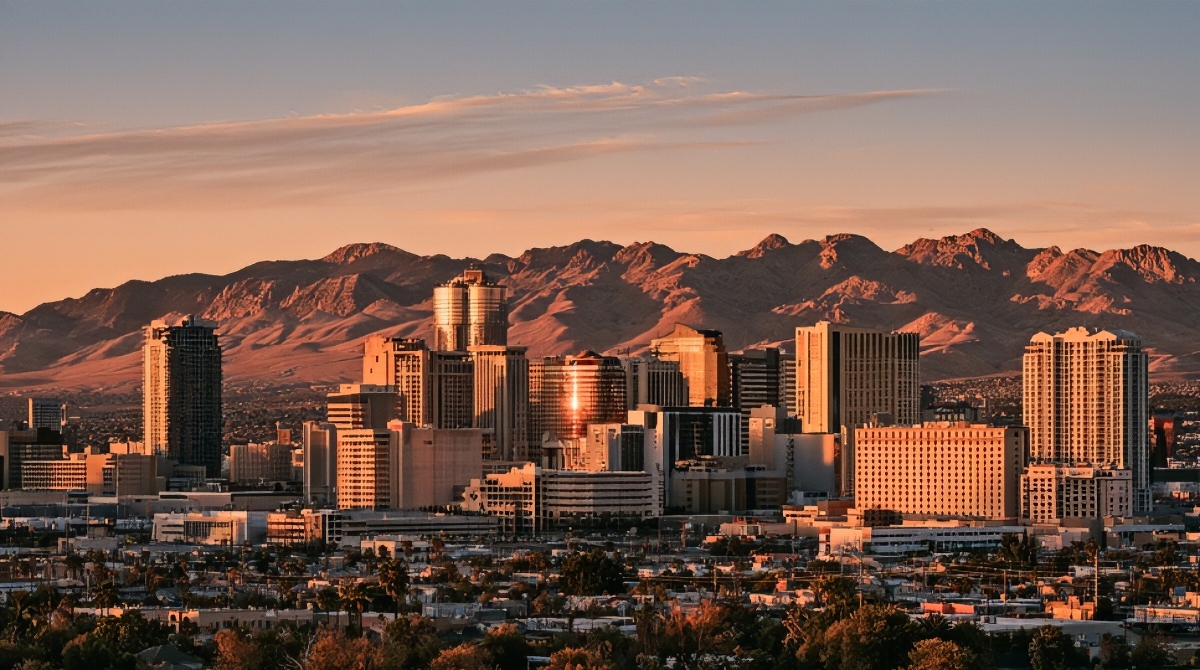
Nevada can be a good place to live, but the honest answer rests on your region, your job, your housing budget, your tolerance for heat, and your need for specialists or strong schools, not on statewide averages. If you’re weighing a move, treat Nevada as several very different places rather than one. The population reached an estimated 3,282,188 in July 2025, up 5.7% since 2020, and the median household income sits at $78,260. Those numbers tell you the state is growing and solidly middle-income, but they say nothing about whether Las Vegas, Reno-Sparks, Carson City, a Tahoe community, or a rural mining town will actually fit the life you want.
Quick Verdict: Who Nevada Suits and Who Should Think Twice
| Nevada may suit you if… | Think twice if… |
| You value having no individual state income tax | You expect inexpensive housing everywhere |
| You like dry weather and easy access to the outdoors | You can’t tolerate extreme heat or wildfire smoke |
| Your work fits a major Nevada industry | You plan to arrive without a job lined up |
| You’re willing to research neighborhoods carefully | You need immediate access to specialist healthcare |
If most of the left column describes you, Nevada is worth a serious look. If the right column keeps hitting home, slow down and read the rest before committing to a lease or an offer.
Nevada Is Not One Place: Comparing the Regions
The single most useful thing to understand is that statewide averages hide large city-to-city differences. Each region has its own climate, job mix, and housing market.
- Las Vegas Valley: The biggest job market, mild winters, brutal summers, and a strong hospitality presence. October 2026 asking rents ran around $2,000 in Las Vegas and about $2,200 in Henderson.
- Reno-Sparks: Four real seasons, a growing logistics and manufacturing base, and higher rents than the south. Reno asking rents were around $2,397 and Sparks around $2,525.
- Carson City and nearby communities: Smaller, government-heavy, with Northern Nevada’s colder winters.
- Rural and mining-centered Nevada: Lower costs in places, but jobs are tied closely to mining, government, and healthcare, and services can be thin.
- Tahoe and resort markets: Beautiful, seasonal, and expensive, with real winter weather.
The statewide median asking rent was roughly $2,044 in October 2026, but that figure smooths over a gap of hundreds of dollars between cities. Readers comparing rental markets before moving to Nevada should look beyond headline rent and factor in utilities, parking, pet fees, insurance, and the commute from each property.
What Does It Cost to Live in Nevada?
Nevada is close to the national average overall, not a bargain state. The Bureau of Economic Analysis put Nevada’s 2024 overall price level at 99.979 where the U.S. equals 100, but the housing-rent component came in at 114.135, roughly 14% above the national benchmark.
Home prices and rent
The statewide median sale price was about $467,939 in October 2026, and the median existing single-family home in Southern Nevada sold for $475,000 that month. Census data for 2020 to 2024 lists a median owner-occupied home value of $435,400 and median gross rent of $1,597. That census rent and today’s asking rents measure different things: gross rent reflects what existing tenants already pay (often including some utilities), while asking rent reflects what landlords want for currently listed units. Don’t treat them as interchangeable.
Taxes
Nevada has no individual state income tax on wages or salaries, which is a genuine advantage for many households. It is not a no-tax state. The base state sales tax is 6.85%, rising to a combined 8.375% in Clark County and 8.265% in Washoe County. Property is assessed at 35% of taxable value, and an abatement generally caps annual increases at 3% for owner-occupied single-family homes and qualifying rentals.
Utilities, transportation and insurance
Nevada’s 2025 average residential electricity rate was 13.26 cents per kWh, below the national average of 17.23 cents. That looks cheap until you factor in Southern Nevada’s long air-conditioning season, which can push summer bills high. Ask for a property’s past electricity bills. Budget for car costs in car-dependent areas, and price flood and earthquake coverage separately, since standard homeowners policies usually exclude both.
Why no income tax doesn’t guarantee a lower total budget
The tax saving is real, but housing above the national benchmark, sales tax near 8.4% in the Las Vegas area, transportation, and cooling costs can eat into it. For a higher earner the math often works. For someone stretching to afford rent, it may not.
Jobs and Wages: Can You Earn Enough to Live There?
Statewide unemployment was 4.7% in September 2026, with roughly 1.62 million nonfarm jobs and 1.6% year-over-year payroll growth. Leisure and hospitality alone accounted for about 362,600 jobs, close to 22% of all nonfarm employment. That concentration shapes wages: Las Vegas-area workers earned an average of $29.23 per hour in May 2025, below the national $33.54, and food preparation and serving made up 14.7% of local jobs versus 8.8% nationally.
The state has diversified into logistics, healthcare, professional services, and manufacturing, especially around Reno, but that doesn’t mean every profession has a deep local market. Reno and Las Vegas draw on different employers, and rural areas lean on mining, government, and healthcare. Unless you work remotely or have substantial savings, line up a job before you move. Compare occupation-specific BLS wages for your field against local housing rather than trusting a single “average salary.”
Weather, Water and Natural Hazards
Southern versus Northern climate
Don’t apply Las Vegas weather to the whole state. Las Vegas has a normal July high of 104.5°F and a normal July low of 82°F, with an urban heat-island effect that keeps central areas warmer at night, balanced by mild winters. Northern Nevada is a different story: Reno gets four distinct seasons, freezing winters, and snow. It recorded 8.3 inches of snow in 2025, 12.6 inches below normal, which shows both that winter weather happens and that it swings year to year. Elko, Ely, and higher-elevation towns run colder still.
Water scarcity, explained calmly
Water is a real long-term planning issue, not an imminent household crisis. The 2026 Tier 1 shortage cut Nevada’s available Colorado River supply by 21,000 acre-feet, while about 99% of Southern Nevada’s indoor water use is recycled, leaving outdoor use as the main conservation target. Post-2026 river rules are changing: federal 2027-2028 guidance contemplated larger Lower Basin reductions, with roughly 50,000 acre-feet assigned to Nevada under the states’ proposed sharing arrangement. These figures are current as of late 2026 and worth rechecking.
Hazards and insurance
Plan around extreme heat, wildfire smoke (more of a Northern Nevada concern), flash flooding, and earthquakes. The USGS ranks Nevada among the 16 states with the highest earthquake hazard. Before you make an offer, check the FEMA flood map and get an actual insurance quote, including separate flood or earthquake endorsements.
Is Nevada a Good Place to Raise a Family?
Skip the blanket claim that Nevada schools are bad. Statewide results show concerns, but individual schools vary sharply. In 2024 NAEP testing, Nevada’s fourth-grade math averaged 233 against 237 nationally, and eighth-grade math 265 against 272. Fourth-grade reading was not statistically different from the national result, while eighth-grade reading came in below it. The Class of 2025 graduation rate reached 85.4%, up from 81.6% a year earlier, and the state’s school star ratings remain uneven across the board.
For a housing decision, research the exact zoned school: its recent star rating, chronic absenteeism, graduation rate, and available programs. Factor in childcare availability and healthcare access too, which carry real weight for families and are covered next.
Is Nevada a Good Place to Retire?
For retirees, the appeal is clear: no individual state income tax on retirement income from wages, and mild Southern Nevada winters that suit people who’ve had enough of snow. The strongest caution is healthcare. A 2025 University of Nevada, Reno report counted 219.8 physicians per 100,000 residents against 297.1 nationally, estimating the state would need about 2,303 more physicians to reach the national average. As of April 2026, federal data listed 79 primary-care shortage designations covering nearly 994,000 residents, with rural and frontier areas hit hardest.
If you manage a chronic condition, verify that your insurance network operates locally, how far the nearest suitable hospital sits, whether primary care is accepting patients, and typical specialist wait times before you commit. Also plan for car dependence outside the densest neighborhoods.
Safety and Everyday Quality of Life
Nevada recorded roughly 402 violent crimes and 2,200 property crimes per 100,000 residents in 2024, above national averages, though both have fallen substantially over the long term. Statewide numbers are a starting point, not an answer. Check current local police data for a specific address, and visit the neighborhood at different times of day before deciding.
The lifestyle upside is real. The Bureau of Land Management oversees nearly 48 million acres, about 63% of the state, and residents have access to Great Basin National Park, Lake Mead, Red Rock, and Lake Tahoe. Hiking, climbing, off-roading, and winter sports are all within reach, alongside entertainment and well-connected airports.
A Practical Nevada Fit Test Before You Decide
Run through these five questions before you sign anything:
- Does your local take-home pay comfortably cover the actual housing cost in your target city?
- Have you visited during the least comfortable season, meaning summer in the south or winter and smoke season in the north?
- Can you reach the healthcare, including specialists, that you actually need?
- Are the exact schools your children would attend acceptable to you?
- Have you priced insurance, utilities, and transportation, not just rent or a mortgage?
Should You Rent Before You Buy in Nevada?
Where it’s feasible, renting first is one of the smartest moves you can make. A six- or twelve-month rental trial can reduce uncertainty when moving to Nevada, especially for people weighing Southern Nevada’s heat against Northern Nevada’s colder winters and smoke season. A trial lets you test the commute, the summer electric bill, and the neighborhood feel before locking in a purchase. When you work with a property manager, confirm they hold the proper credentials: Nevada requires a real-estate license and a property-management permit for anyone managing property for others, which gives you a clear standard for vetting.
Frequently Asked Questions
Is Nevada expensive to live in? Overall costs sit near the national average, but housing runs roughly 14% above the national benchmark, so budget carefully for rent or a mortgage.
What salary do you need to live comfortably in Nevada? There’s no single number. Compare occupation-specific BLS wages for your field against housing in your target city. For context, the statewide median household income is $78,260.
Is it better to live in Las Vegas or Reno? Las Vegas has milder winters, hotter summers, and a hospitality-heavy job market. Reno has four seasons, real winters, and more logistics and manufacturing. The right pick depends on climate tolerance and your industry.
Does Nevada really have no income tax? There’s no individual state income tax on wages, but sales tax near 8.4% in the Las Vegas area, property taxes, and above-average housing can offset the saving.
What should I know before moving to Nevada? Choose your region deliberately, secure a job first unless you’re remote, confirm healthcare access, price insurance including flood and earthquake coverage, and visit during the least comfortable season.

Final Verdict: Is Nevada Right for You?
Nevada can deliver a strong quality of life for people who pick the right region and show up with realistic expectations. The decisive questions aren’t just taxes and sunshine. They’re whether local pay covers local housing, whether you can reach the healthcare and schools you need, and whether you can live with the climate you’ve chosen. Answer those honestly, and you’ll know whether Nevada is a good place for you to live.