



































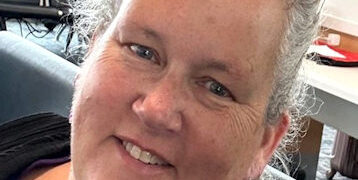










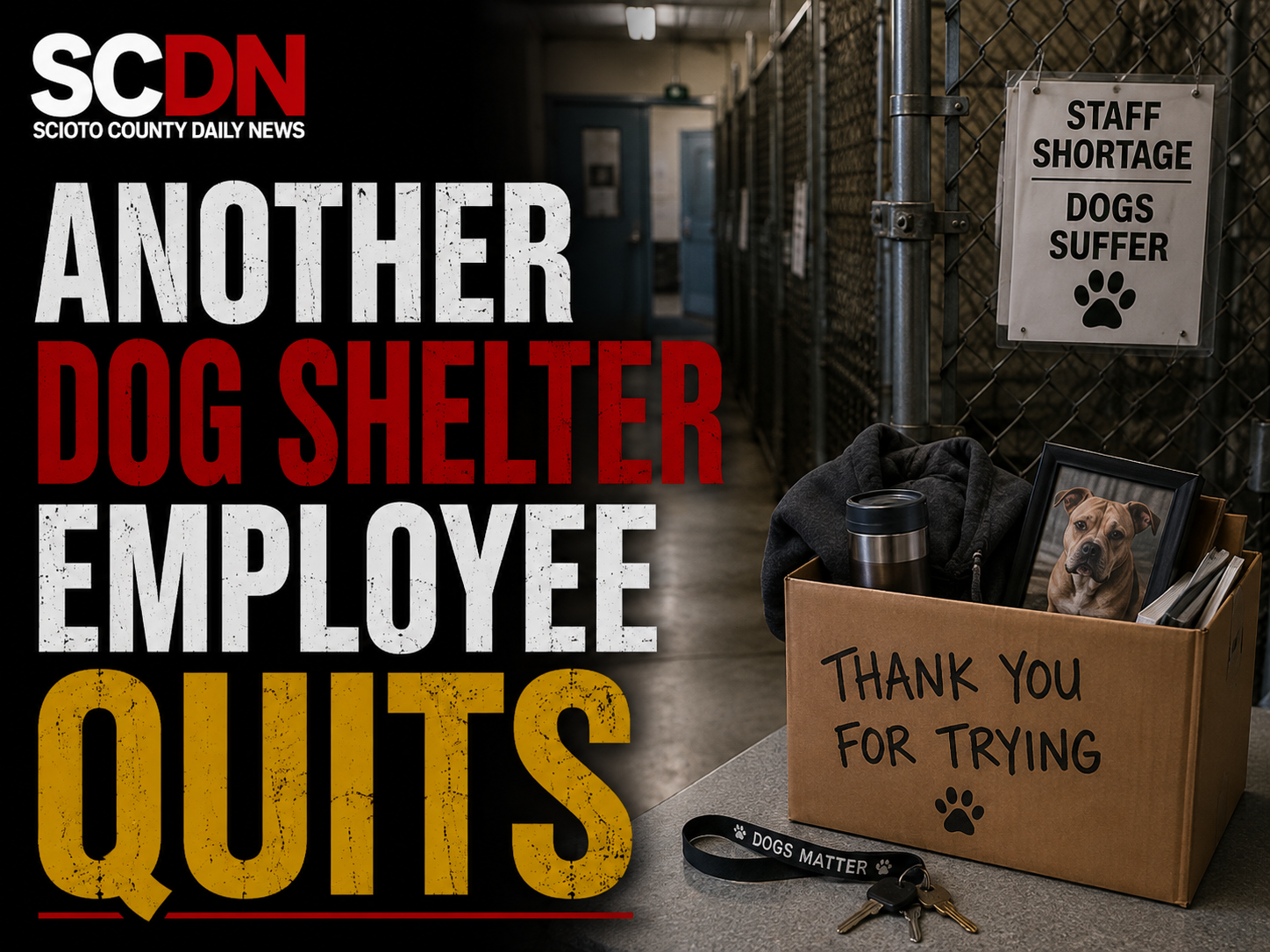
Another longtime employee is walking away from the troubled Scioto County Dog Shelter, and this time she says she isn’t leaving quietly.
Kennel technician Shanna Donini, who has worked at the shelter for more than three years, told SCDN she stayed through months of turmoil because she worried about what would happen to the dogs if experienced employees continued to leave.
Now, she says she’s reached the opposite conclusion.
“I’ve just been keeping them afloat, and it’s time to turn the boat over.”
Donini’s resignation is the latest in a string of departures from the shelter and Dog Warden’s Office during a year marked by allegations of poor working conditions, staffing shortages, questions about training and procedures, difficulty responding to animal-control calls, and repeated changes in dog wardens.
And Donini says the problems go far beyond staffing.
“The Main Issue Was the Lack of Leadership and Structure”
Donini said she has worked at the shelter for three years and four months, typically five days a week and frequently covering weekends.
“There are several reasons for leaving,” she told SCDN. “The main issue was the lack of leadership and structure.”
She alleges there were weekends when a dog warden scheduled to help did not show up, leaving kennel staff dealing with more than 40 dogs.
But Donini said her biggest concern was watching procedures she and former Dog Warden Heather Stevens had worked to establish begin to fall apart after Stevens’ controversial resignation.
“I watched all of the work that Heather and I had put into the shelter and getting dogs out to rescue being dismantled by lack of procedures,” Donini said.
Among her biggest concerns: parvo prevention, cleaning, vaccination and quarantine procedures.
And Donini provided SCDN with an email showing that an outside rescue organization had raised strikingly similar concerns.
Transport Organization Stopped Taking Scioto Dogs
In a March 15 email Donini provided to SCDN, Stop the Suffering Executive Director Lynne Aronson informed rescue partners that the organization was halting transport services for dogs from the Scioto shelter.
Aronson wrote that there had been “several disease incidents (Parvo)” at the shelter in the preceding weeks and alleged that her organization had not been notified before continuing to transport dogs.
She said Stop the Suffering subsequently learned that dogs potentially exposed to parvo had been placed on transport.
The email also alleged that, because of financial constraints, dogs were not consistently receiving vaccines at intake or appropriate boosters.
After what Aronson described as a further assessment, she offered a harsh conclusion, writing that she believed shelter leadership was not adequately training employees and that the facility likely lacked standard protocols for vaccine management, quarantine, cleaning and other daily safety procedures.
Stop the Suffering told its rescue partners they could continue pulling dogs from Scioto County independently, but the organization would no longer put those animals on its transport and “strongly recommend[ed] quarantining any dog coming from this shelter, at least for now.”
“This is awful for the dogs,” Aronson wrote, “but we cannot compromise safety on our transport.”
Donini: Employees Weren’t the Problem
Interestingly, the email specifically praised Donini as Stop the Suffering’s shelter contact.
“Shanna has been great to work with as a contact,” Aronson wrote, before saying she suspected Donini and other employees had not received the level of training commonly provided to shelter workers elsewhere.
That distinction is important because it mirrors one of Donini’s central complaints: she says rank-and-file employees have been expected to keep the operation going without enough structure, training or consistent leadership.
Donini said she initially stayed after Stevens left precisely because she worried about the animals.
“I stayed for so long after Heather left because I feared the dogs would not be properly taken care of,” she said.
But she now believes public scrutiny may be the only way to force lasting changes.
“I now realize the only way to get any change to happen is to make everything as transparent as possible.”
“I Never Once Saw the Commissioners Come Out”
Donini also questioned how closely county leadership has been involved with the shelter over the years.
“I’ve been there three years, five days a week — I covered weekends — and I never once saw the commissioners come out,” she said.
Commissioners have become much more publicly involved with the shelter in recent months as controversy mounted. They have discussed repairs, staffing, nonprofit partnerships and even the possibility of transferring dog warden responsibilities to the Scioto County Sheriff’s Office.
The county recently advertised a combined Dog Warden/Director position, another indication commissioners are considering significant changes to the way the operation is structured.
Phipps Withdraws Resignation
The staffing picture has also changed yet again.
Donini said Dog Warden Olivia Phipps, whose resignation had previously been announced, has withdrawn that resignation and remains with the department.
Phipps was convicted of OVI in Portsmouth Municipal Court earlier this month after pleading guilty. She received a fine and was ordered to complete a driver intervention program. Donini says Phipps has since resumed driving a county vehicle.
According to Donini, once she leaves, the remaining regular staff will include the shelter director, an office employee and the warden.
Allegations of Serious Mistakes With Dogs
Donini also described incidents she believes demonstrate why stronger training and procedures are necessary.

SCDN is not naming the individual employees involved in these allegations, because the important issue is the shelter practice Donini says needs to change.
In one instance, Donini alleges two intact male dogs were placed together and fought, causing what she described as catastrophic injuries to both animals.
She claims the dogs were given pain medication but were not immediately taken to a veterinarian and remained in kennels until she saw them the following day.
In another incident, she alleges an intact male and female were placed together and bred. Donini said it fortunately did not appear the female became pregnant.
For Donini, the incidents point to a larger problem.
“We have to be the example for the community on how to take care of these dogs,” she said, adding that she believes the shelter is currently failing to meet that standard.
Overcrowding Isn’t Going Away
Staffing and management aren’t the only problems.
Donini said the shelter remains overcrowded and that dogs continue to be dumped at an alarming rate.
She believes Scioto County desperately needs a stronger push for affordable spay-and-neuter programs.
Some animals, she said, arrive underweight because owners are struggling financially and cannot afford to properly feed them.
That means even a perfectly managed shelter would still face enormous pressure from the number of dogs coming through the doors.
“We definitely need volunteers, funding, of course, because the place is still in rough shape,” Donini said.
She said some improvements have been made, but claims the roof still leaks into kennel areas during heavy rain.
“Now it seems like the shelter’s been forgotten again.”
Vaccinate on Intake. Treat Injuries. Put Dogs First.
Asked what it would take to turn the shelter around, Donini’s answer was straightforward.
“They need someone who is going to put the dogs first.”
She said dogs shouldn’t wait until afternoon for basic care, vaccinations should be administered at intake, and animals requiring medical attention should receive it promptly rather than being left in pain.
Those are the types of basic written procedures Donini says need to be established, taught and consistently enforced regardless of who happens to be working that day.
Despite everything, she doesn’t believe the Scioto County Dog Shelter is beyond saving.
“I think the shelter has a lot of potential to be a great facility,” Donini said. “If the correct people are hired, procedures are put in place and the standards are held accountable.”
Could the Sheriff Be the Answer?
Donini also supports an option commissioners have publicly acknowledged they are exploring: putting dog warden operations under the Scioto County Sheriff’s Office.
“I think the sheriff taking over would be a great idea,” she said.
Donini pointed out that deputies already encounter animals during arrests, evictions and after-hours calls. She believes bringing dog warden operations under the Sheriff’s Office could streamline responses and potentially reduce the cost of maintaining separate after-hours warden coverage.
Commissioners have said they have discussed the possibility with the Sheriff, but no decision has been made.
Another Employee Gone — Same Big Question
Donini’s departure adds another name to an increasingly long list of people who have left the shelter or Dog Warden’s Office during months of upheaval.
But her resignation also comes as commissioners are attempting to reshape the operation. The county is working with nonprofits including Scioto Hounds, has made repairs to the facility, is considering a combined Director/Dog Warden position, and is exploring whether the Sheriff’s Office could play a larger role.
Meanwhile, the dogs keep coming in.
For Donini, that’s why she stayed as long as she did — and why she finally decided to leave.
She says keeping an understaffed, struggling system afloat one more day isn’t enough anymore.
“It’s time to turn the boat over.”