









































































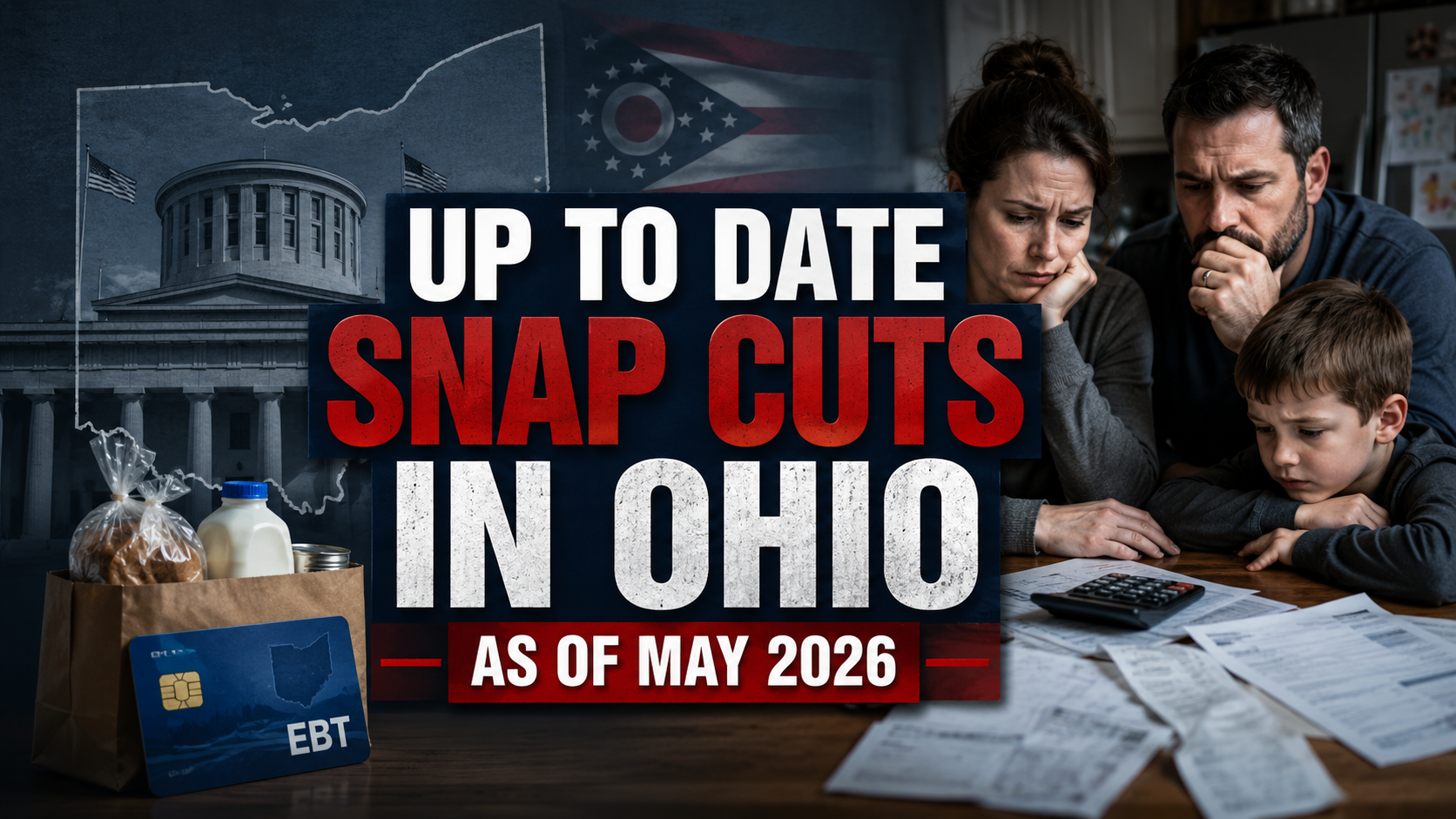
For Ohio families who rely on SNAP, the biggest cuts in 2026 are not a single across-the-board cut to every monthly benefit. It is a tighter set of rules that can make it easier for some adults to lose help. SNAP, still commonly called food stamps, is the federal program that helps low-income households buy food. USDA says the program is meant to supplement grocery budgets so families can afford food essential to health and well-being.
The shift began after President Donald Trump signed the One Big Beautiful Bill Act of 2025 on July 4, 2025. USDA’s Food and Nutrition Service says the law changed SNAP in several areas, including work requirements, eligibility rules, matching-fund requirements and administrative cost sharing. Ohio then moved to update its own rules to reflect those federal changes.
The most important change for many Ohio adults is the work-rule expansion. Ohio guidance says that before the 2025 law, able-bodied adults ages 18 to 54 were subject to a 20-hour-per-week work requirement unless they qualified for an exemption. Those exemptions had included veterans, people experiencing homelessness, former foster youth under 25, and parents or adults with children under 18 in the assistance group. Under the new law, Ohio says those exemptions for veterans, homelessness and former foster youth were removed, the age range was expanded to 18 through 64, and the parental exemption was narrowed so it now applies only when a child in the household is under 14.

Ohio’s April 2026 rule update says these state rule changes became effective on May 1, 2026. The same update says individuals ages 16 to 64 are now screened for work-rule exemptions, and it spells out how people can lose or regain eligibility depending on whether they meet the new standards. That means the practical effect in Ohio is not just a policy debate in Washington. It is a live compliance issue for households that must now prove they fit within narrower exemptions.
Ohio also says the Trump-signed law revised who may automatically receive the standard utility allowance and limited SNAP eligibility for non-citizens to certain groups. Those changes were included in the state’s rule revisions tied to the federal law.
What has not happened, at least not in the simple way many headlines suggest, is a universal reduction in the published maximum SNAP allotment for every household in Ohio. USDA’s fiscal year 2026 SNAP table still lists the maximum monthly allotment in the 48 contiguous states at $298 for one person, $546 for two, $785 for three, and $994 for four. The minimum allotment remains $24 for one- and two-person households. Those federal amounts run from Oct. 1, 2025, through Sept. 30, 2026.
That is why the real Ohio SNAP cuts story in May 2026 is narrower and harsher at the same time. The pressure is landing through eligibility screens, work rules and lost exemptions. Families who remain eligible may still receive benefits under the same federal maximum tables, but more adults now face a greater risk of losing access to those benefits altogether if they cannot meet or document the new requirements.
Another Ohio SNAP change has drawn attention, but it is not yet in force this month. Ohio received federal approval to prohibit the purchase of carbonated sugary drinks through SNAP, but the state said that change will not take effect until Oct. 1, 2026. So as of May 2026, the biggest Ohio SNAP cuts already in force are the work and eligibility rules, not the sugary-drink restriction.
Public data is also lagging behind the policy changes. USDA’s SNAP data tables say the latest available state-level participation and benefits data is November 2025. That means the full effect of Ohio’s spring 2026 rule changes is not yet fully visible in the latest federal public numbers. Any claim that precisely counts how many Ohio households have already lost benefits because of the new rules would go beyond the most current public USDA data now available.
Supporters of the changes say they are about accountability, program integrity and nutrition. USDA says the Trump administration is pursuing SNAP cuts to strengthen integrity and restore nutritional value, while the White House has described stronger work requirements and lower error rates as taxpayer savings measures. Critics argue the burden falls hardest on people already living closest to the edge, especially adults who previously qualified for exemptions and now must meet rules they did not face before.
The cleanest way to understand Ohio’s SNAP changes in May 2026 is this: the program’s maximum published benefit levels have not been slashed across the board, but the path to keeping those benefits has become harder for more people. For households already stretched thin, that can feel like a cut all the same.
Bullet point summary
- Trump signed the One Big Beautiful Bill Act of 2025 on July 4, 2025, and USDA says it changed SNAP work requirements, eligibility rules and other program areas.
- In Ohio, the key SNAP rule changes tied to that law became effective in spring 2026, including a major rule update effective May 1, 2026.
- Ohio says the SNAP work-rule age range expanded from 18–54 to 18–64 for affected adults.
- Ohio says exemptions were removed for veterans, people experiencing homelessness, and former foster youth, and the parental exemption was narrowed to households with a child under 14.
- Ohio also says the law revised standard utility allowance eligibility and limited SNAP eligibility for some non-citizens to certain groups.
- As of May 2026, USDA’s published maximum SNAP benefit amounts for the 48 contiguous states have not been universally cut: the maximum remains $298 for one person and $994 for a four-person household for FY 2026.
- Ohio’s sugary-drink SNAP restriction was approved, but the state said it does not take effect until Oct. 1, 2026.