















































































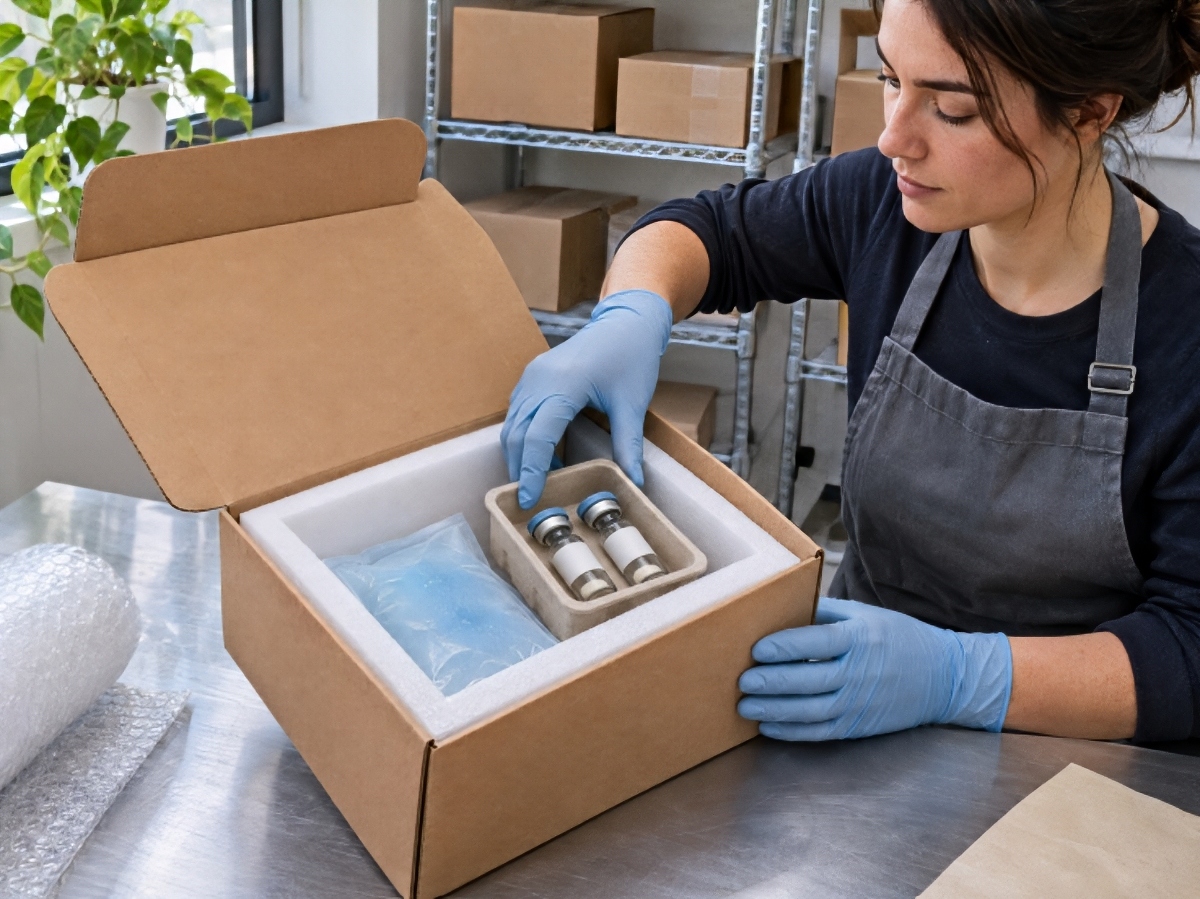
Shipping peptides is not only about packing a product and giving it to a courier. Some peptides react to temperature, moisture, and other conditions, so how you store and ship them matters. For small businesses, paying focus on these details is key to successful fulfillment.
The challenge is that not all peptides act the same way. Their stability depends on things like their amino acid sequence, how they are made, their physical form, and the conditions they face. A shipping method that works for one product might fail for another, so suppliers should know the needs of each material before choosing how to ship it.
Start with the product’s storage requirements.
Before picking packaging, look at the product documentation and any stability information you have. Some materials need certain temperatures, while others need to be kept away from moisture or harsh conditions. Don’t assume every peptide needs to be refrigerated or that keeping everything cold will always protect quality.
Lyophilized peptides have been freeze-dried to remove most of the water, which can help them last longer in storage. That doesn’t make them completely stable, though. If they’re exposed to moisture, kept under the wrong conditions, or handled too often, their quality can still change.
Peptides that come in solution need different care because the liquid they are in may affect their stability. So, you should not use the same shipping method for every product. It’s better to follow product-specific instructions than to rely on general ideas about peptide chemistry.
Packaging needs to suit the journey.
Insulated packaging, coolants, and temperature monitors can help secure sensitive shipments, but the best option depends on the product and how far it needs to go. Packaging that works for a short local delivery might not be enough for a longer trip with many stops.
Before arranging a shipment, small businesses need to consider more than just the delivery time. Weather conditions, courier collection schedules, and unexpected delays can all affect how a parcel travels. Sending a package during a heatwave, for example, may create different storage concerns than sending it in colder weather. Friday collections can also be tricky, as a parcel might spend longer in transit over the weekend than originally expected.
Packaging should be practical, too. It needs to protect the product from damage and provide the right environmental protection. Using boxes that are too big can raise shipping costs, while not enough insulation or poorly packed materials can leave the shipment at risk.
If temperature control is needed, evaluate the packaging in real-world conditions. Evaluationmethods can show if the system has maintained the right environment for as long as needed, instead of just looking good when first packed.
Choosing a courier is only part of the decision.
A courier’s delivery estimate is helpful, but it does not cover every part of the journey. Parcels might wait to be picked up, spend time at sorting centers, or get delayed by weather, problems, or busy seasons.
Customers need honest information, too. Suppliers should tell them when to expect dispatch and let them know about any delays. Transparent updates may not stop every shipping issue, but they help customers know what’s going on and who to contact if they have inquiries.
Keep records of packing and transit.
For shipments that need temperature monitoring, use an indicator or data logger to track conditions while in transit. The kind of monitoring must match what the product needs and what could happen if the temperature goes outside the safe range.
Suppliers should keep records of packing and shipping. These can include when the parcel was packed, which shipping method was used, any handling instructions, and any delivery issues. If a customer has a concern, these records help figure out what happened.
What happens when a shipment goes wrong?
When a parcel arrives damaged, gets delayed, or may have been exposed to the wrong temperature, staff need to know what to do next. There should be a clear procedure to follow, including who needs to be informed, what records need checking, and whether the product should be set aside until the situation has been reviewed.
Looking at problems over time may also help suppliers spot patterns. For example, repeated delivery delays or temperature warnings might point to an issue with the courier, the packaging, collection schedules, or the way shipments are handled. Finding and addressing the cause can help prevent the same problem from happening again, rather than dealing with each incident separately.

Make the process manageable for a small business.
A small peptide supplier does not need a big distribution team to improve shipping. Following product-specific instructions, using the right packaging, keeping a reliable shipping routine, and keeping clear records can make the process more consistent.
Staff should know which products need special care and where to find the right information. The business should also check customer complaints and delivery records from time to time to see if their shipping process is working well.
Shipping temperature-sensitive products takes planning, but the goal is simple: send the right product in the right way, keep customers informed, and keep enough records to solve problems if they come up. A good shipping process protects more than just the parcel—it also helps keep customers’ trust.
Visit Biotech Peptides for the best research materials available online.
References
- Wang, W. (1999). Instability, stabilization, and formulation of liquid protein pharmaceuticals. International Journal of Pharmaceutics, 185(2), 129–188.
- Manning, M. C., Chou, D. K., Murphy, B. M., Payne, R. W., & Katayama, D. S. (2010). Stability of protein pharmaceuticals: An update. Pharmaceutical Research, 27, 544–575.
- Carpenter, J. F., & Crowe, J. H. (1989). An infrared spectroscopic study of the interactions of carbohydrates with dried proteins. Biochemistry, 28(9), 3916–3922.
- Chang, L. L., Shepherd, D., Sun, J., Ouellette, D., Grant, K. L., Tang, X., & Pikal, M. J. (2005). Mechanism of protein stabilization by sugars during freeze-drying and storage: Native structure preservation, specific interaction, and/or immobilization in a glassy matrix? Journal of Pharmaceutical Sciences, 94(7), 1427–1444.
- Franks, F. (1998). Freeze-drying of bioproducts: Putting principles into practice. European Journal of Pharmaceutics and Biopharmaceutics, 45(3), 221–229.