










































































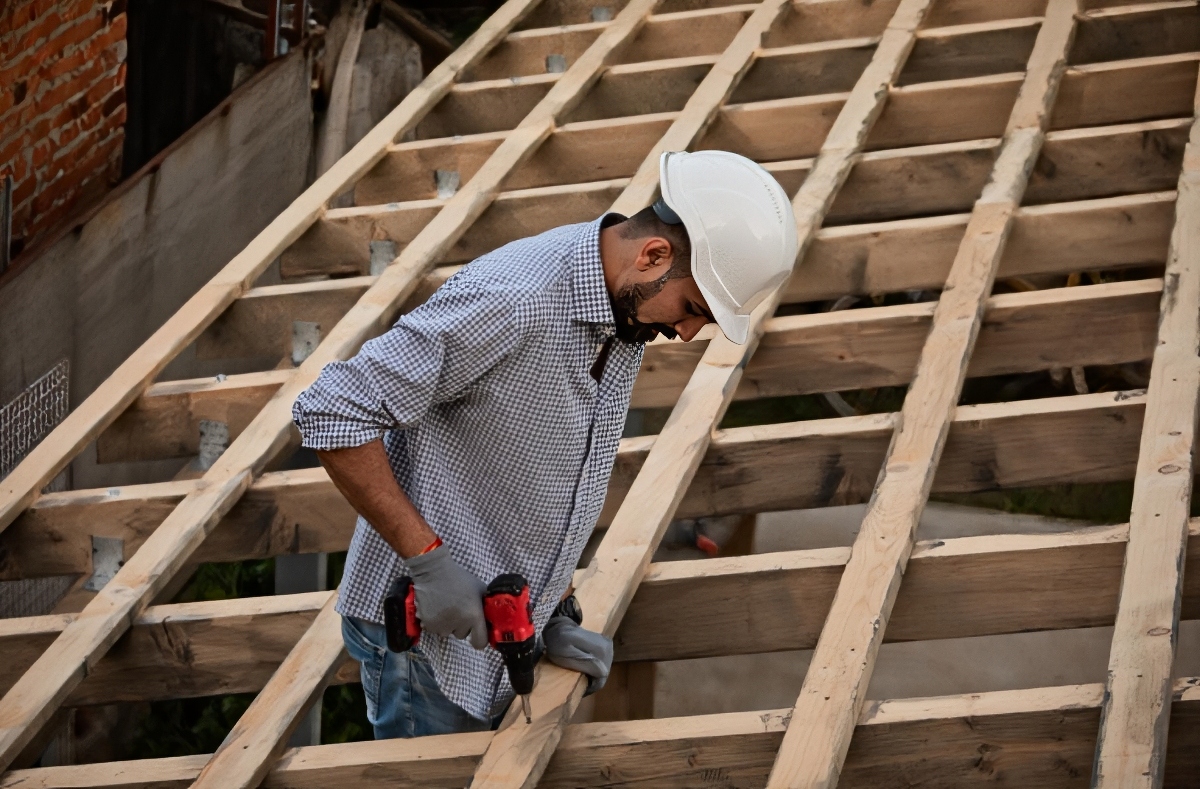
A roof is easy to file under maintenance: you replace it when it leaks or reaches the end of its life. Your insurer treats it as something closer to the policy’s foundation. Age and material together shape what an insurer expects to pay out, which is why they move a premium more than most details about the house.
What a roof tells an insurer
Most property claims begin with weather, and the roof meets the weather first. Age is a proxy for how much life is left, and material signals how the roof is likely to fail and what it costs to put back. Together they answer what an insurer is really asking: not how the house looks, but how soon it is likely to cost money.
The roof is not one detail among many. For many insurers it decides whether a house can be quoted at all, before it decides the price.
The details behind those two questions
The roof questions on a quote form are narrow, and each answer carries weight:

- Age, measured from the last full replacement, not the year the house was built.
- Material, since asphalt shingle, tile, and metal wear at different rates and cost different amounts to replace.
- Whether the last work was a full replacement or a partial repair, since a patch may not reset the roof’s age.
- Shape and slope, which affect how the structure handles wind.
- Documentation, since many insurers want a permit or contractor invoice rather than your recollection.
None of these are unusual questions. They are simply the inputs behind a single line on your quote.
Replacement cost and actual cash value
Two policies can cover the same roof on very different terms. Many insurers pay replacement cost on a newer roof, then switch to actual cash value as it ages, which is that cost minus depreciation. The premium may barely move when that switch happens. What changes is the size of the payment, which is why the settlement basis deserves as much attention as the price.
What to have ready before you quote
Find the year of the last full replacement and the paperwork proving it, since an undocumented roof is often treated as older than it is. Know the material and the approximate slope. Ask each insurer how it settles roof losses at your roof’s age, and at what age those terms change. If you replace a roof mid-policy, request new quotes then rather than waiting for renewal.
Key takeaways
- Insurers read roof age and material as a forecast of future claims, so both weigh heavily on price.
- A roof can affect eligibility, not only premium: some insurers decline a house others will quote.
- Age is measured from the last full replacement, and undocumented work is often treated as none at all.
- Settlement terms often shift from replacement cost to actual cash value as a roof ages, changing what the premium buys.
Nsure is a licensed digital insurance agency founded in 2018, operating in all 50 states and working with more than 100 top-rated carriers rated A- or better. It does not underwrite these policies itself: it shops your details across its carrier network and brings back real, bindable offers rather than one insurer’s view of your roof. You answer questions about the roof and the rest of the property once, then see quotes for home insurance with Nsure lined up side by side, which matters here because carriers set their own age thresholds and settlement terms for roofs. About 30 days before your policy renews, Nsure reshops the market and places new offers next to your current price, so a roof that has crossed an insurer’s threshold does not go unnoticed. The whole process runs on your phone or computer, with no cold calls and no cost to compare, and documents arrive electronically the moment you bind. Nsure is paid a commission by the carrier you choose, the same way any licensed agency is paid, so checking how several insurers price your roof never costs you more.