





































































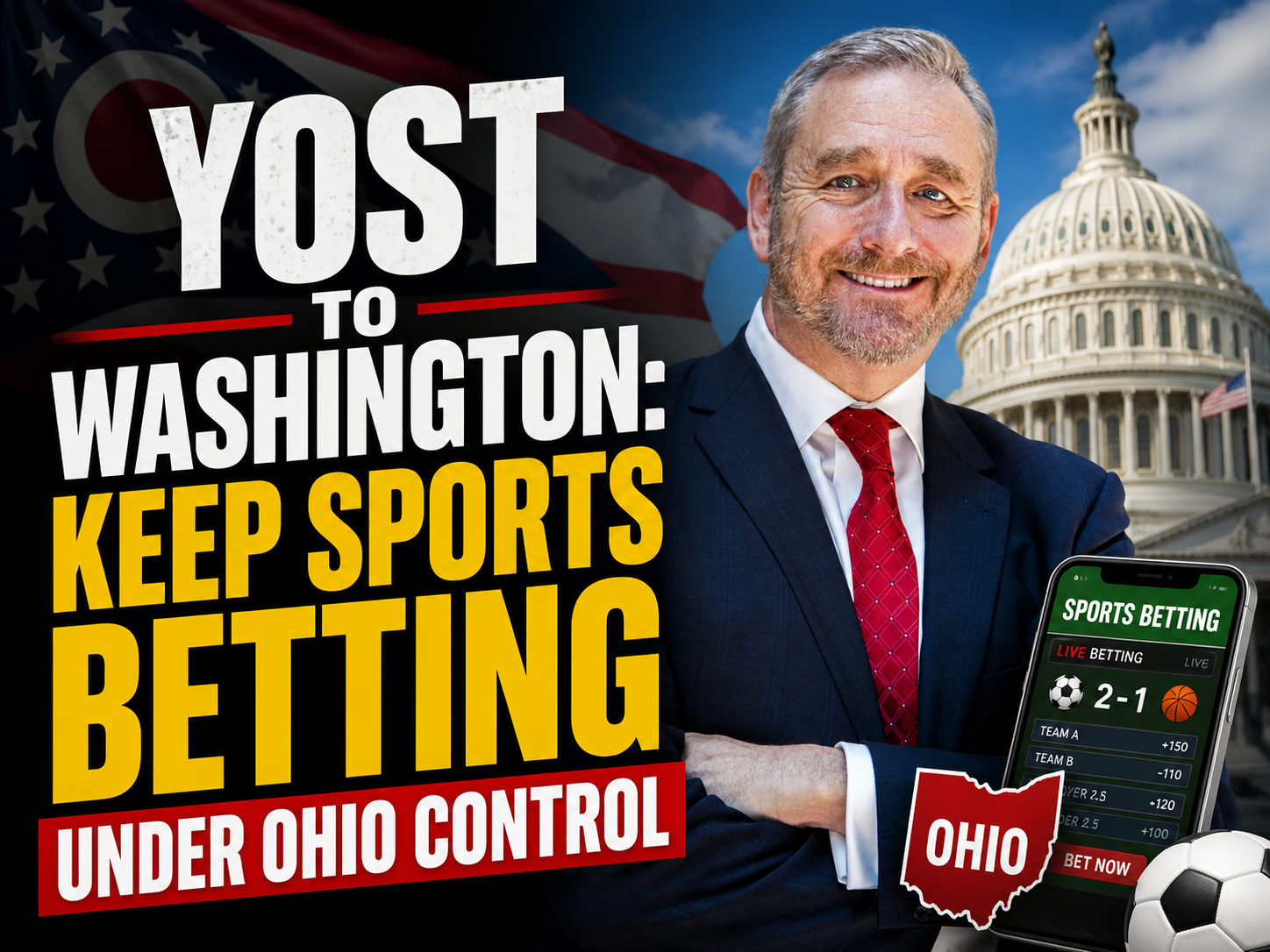
Ohio Attorney General Dave Yost is leading a bipartisan push to keep control of sports betting in state hands—not Washington’s.
Yost joined 40 other attorneys general in telling federal regulators that so-called “prediction markets” are really just sports gambling dressed up in a different outfit.
“This is gambling, no matter how they try to dress it up,” Yost said, arguing states have the experience and responsibility to regulate it.
WHAT’S THE FIGHT ABOUT?
The battle centers around websites like Polymarket and Kalshi.
These platforms let people wager money on outcomes such as:

- Who wins a game
- Point spreads
- Player stats
- Championship results
That sounds a lot like a sportsbook because, according to the states, it basically is one.
The concern is these sites may be trying to operate under federal commodities rules instead of state gambling laws.
Yost and the coalition say that would let them skip:
- State licensing rules
- Consumer protections
- Problem gambling safeguards
- State taxes and fees
WHY OHIO CARES
Sports betting is already legal and heavily regulated in Ohio.
Ohio launched legal sports betting in 2023, creating a major new revenue stream.
That money helps fund state priorities while allowing oversight of operators.
WHAT BETTING IS LEGAL IN OHIO?
Ohio currently allows several forms of legal gambling, including:
- Sports betting (mobile apps, casinos, sportsbooks, kiosks)
- Casinos at places like Hollywood Casino Columbus and Hard Rock Casino Cincinnati
- Racinos with video lottery terminals
- Ohio Lottery scratch-offs and draw games
- Charitable gaming such as bingo and raffles
- Horse racing wagering
Each comes with state rules, taxes, and enforcement.
THE MONEY ANGLE
Let’s be honest: states notice gambling money.
Legal sportsbooks across the country generate:
- Tax revenue
- Licensing fees
- Jobs
- Tourism and entertainment spending
That’s why many states want betting inside their own regulated system—not siphoned off through loosely regulated online markets.
WHY STATES WANT CONTROL
Yost and others argue states are better positioned to:
- Block underage betting
- Address gambling addiction
- Enforce honest odds and payouts
- Collect taxes owed
- Shut down bad actors quickly
THE BIGGER PICTURE
This isn’t just about gambling.
It’s about who gets to control a fast-growing billion-dollar industry: states that already regulate betting—or federal agencies overseeing markets never meant to become sportsbooks.
Ohio’s message was simple:
If it looks like sports betting, acts like sports betting, and profits like sports betting… the state wants the keys.