








































































Thanksgiving is supposed to end with everybody stuffed, somebody asleep in a recliner and at least one argument over whether the cranberry sauce should come from a can.
It is not supposed to end with the fire department in your driveway.
And yet Thanksgiving remains the biggest day of the year for home cooking fires. The National Fire Protection Association says an estimated 1,139 home cooking fires were reported on Thanksgiving Day in 2024 — more than three times the normal daily average.
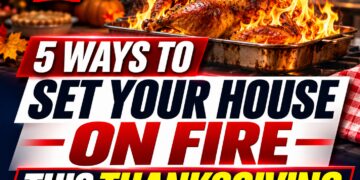
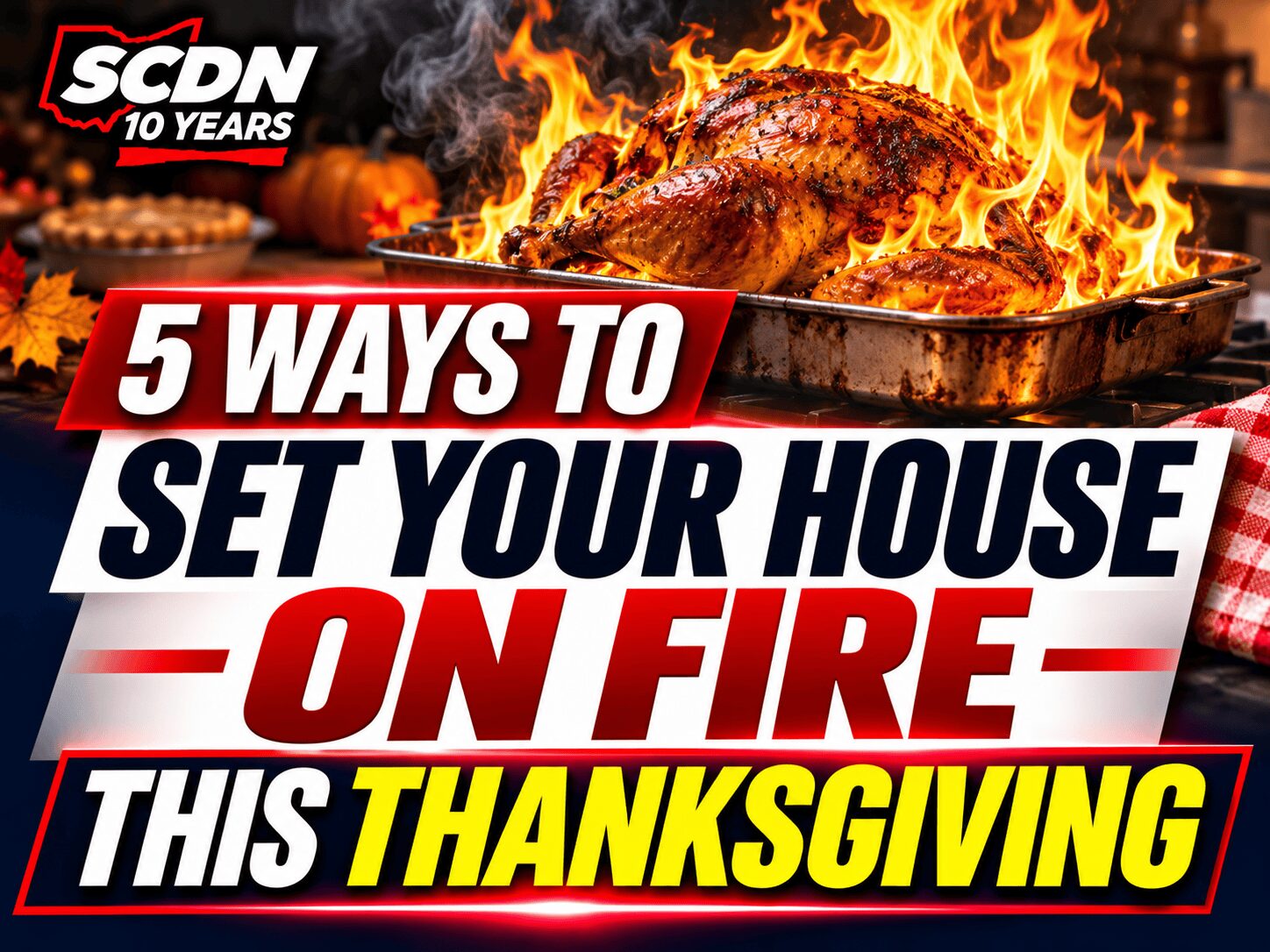
So, in the spirit of holiday preparedness, here are five excellent ways to set your house on fire this Thanksgiving.
And, more importantly, how not to do them.
- Declare War on a Turkey
We have all seen the videos.
Somebody lowers a frozen turkey into a vat of boiling oil.
There is a whoosh.
Then there is a fireball.
Then somebody is running.
Turkey-fryer disasters have been demonstrated so many times that you would think everyone had gotten the message by now.
Apparently not.
Oil fryers can overflow if they are overfilled. A partially frozen turkey can send hot oil splashing everywhere. The fryer itself can tip. The oil can overheat and ignite.
And putting one in a garage, on a wooden deck or under an overhang is basically inviting the fire to come inside.
The NFPA goes even further and recommends not using oil-filled turkey fryers at all, suggesting electric, infrared or air-fryer alternatives instead.
If you insist on frying one, the U.S. Fire Administration says the bird needs to be completely thawed, the fryer needs to sit on a stable, nonflammable surface at least 10 feet from the house, and someone needs to stay with it the entire time.
And please do not decide that a little fire can be fixed with a bucket of water.
Water and burning grease do not mix.
For a small grease fire in a pan, turn off the heat and slide a lid or baking sheet over the pan to smother it. Leave it covered until it cools.
If the fire is growing, get everybody out and call 911.
The turkey is replaceable.
The kitchen is expensive.
- Forget Something Is in the Oven
Turkey fryers get all the attention because they produce spectacular videos.
But the more ordinary Thanksgiving fire is much less exciting.
Someone starts cooking.
The doorbell rings.
Uncle Bob arrives.
The football game gets interesting.
Someone needs help finding the gravy boat.
Twenty minutes later:
“Do you smell something?”
Unattended cooking is one of the biggest contributors to home cooking fires. NFPA says ranges and cooktops account for more than half of home cooking-fire incidents.
Stay in the kitchen when frying, sautéing or cooking on the stovetop.
If the turkey is in the oven, stay home and check it regularly.
Use timers.
And don’t stack oven mitts, paper towels, grocery bags, cardboard boxes and dish towels around the stove like you’re building kindling.
For an oven fire, turn the oven off and keep the door closed. Opening it can feed the fire oxygen. If you’re not sure the fire is out, call the fire department.
Also: Thanksgiving may not be the ideal day to discover that three years of grease have accumulated under your burners.
Clean before the marathon cooking begins.
- Plug Everything Into That One Sketchy Outlet
Thanksgiving kitchens suddenly need electricity for everything.
Slow cookers.
Roasters.
Coffee makers.
Electric knives.
Mixers.
Food warmers.
Air fryers.
And somehow they all wind up plugged into the same outlet using an extension cord that has been living in the basement since 1997.
Holiday gatherings can put extra stress on electrical systems that were already questionable.
If an outlet feels hot, sparks, smells burned, buzzes, has scorch marks or won’t firmly hold a plug, stop using it.
The same goes for extension cords with cracked insulation, exposed wires, bent plugs or suspicious repairs involving electrical tape.
Electrical failures and malfunctions are blamed for an estimated 46,652 home structure fires a year, according to NFPA’s latest research. Those fires caused an estimated 527 deaths annually from 2020 through 2024.
Extension cords are supposed to be temporary.

They are not an invitation to turn one wall outlet into a 14-appliance electrical distribution center.
And don’t run cords under rugs where they can overheat or be damaged without anyone noticing.
If the breaker keeps tripping, that’s not the house being difficult.
It’s trying to tell you something.
- Add Candles, Kids and Lighters
Nothing says Thanksgiving like a pretty table with candles.
Nothing ruins Thanksgiving like a toddler discovering fire.
Candles need space around them and should never be left burning in an empty room.
Keep them away from curtains, decorations, paper napkins and anything else that can burn.
And if small children are visiting, rethink where you’ve stored the matches and lighters.
Putting a lighter on a high shelf may work right up until someone drags over a chair.
NFPA recommends keeping matches and utility lighters high and locked away, not merely out of immediate sight. Children should never be left alone in a room with a burning candle.
There is another Thanksgiving hazard adults sometimes overlook:
You may know where the lighters are.
Your visiting relatives may not.
A purse tossed on a couch, coat pocket or overnight bag may contain matches, cigarette lighters or medications that aren’t normally accessible to children in your home.
Holiday childproofing has to account for the guests, too.
- Invite Smoking and Space Heaters to the Party
Maybe yours is a nonsmoking house.
Great.
Then somebody’s brother-in-law decides to sneak outside for a cigarette and realizes there isn’t an ashtray.
So the cigarette butt goes into a flowerpot.
Or the mulch.
Or a trash can.
Or some other location containing something that eventually decides it would like to burn.
If guests smoke, give them a safe place to dispose of cigarettes.
Do not let improvised ashtrays become part of the holiday entertainment.
Then there are space heaters.
Thanksgiving can be cold, and crowded houses sometimes have rooms that don’t heat evenly.
A portable heater gets dragged out.
Then somebody piles coats near it.
Or pushes a chair against it.
Or plugs it into an extension cord.
Heating is consistently one of the leading causes of residential fires. U.S. Fire Administration data shows it is particularly significant during the colder months.
Keep anything that can burn at least three feet away from a portable heater.
Plug the heater directly into a wall outlet rather than an extension cord or power strip.
And turn it off when nobody is in the room.
Your Kitchen Is Going to Be Chaos. Plan Accordingly.
The problem with Thanksgiving isn’t that everyone suddenly forgets fire safety.
It’s that everything happens at once.
Someone is cooking six dishes.
Kids are running through the kitchen.
The dog is underfoot.
People are arriving.
The football game is on.
Someone needs ice.
Someone else can’t find the serving spoon.
And apparently the rolls have been in the oven for 45 minutes.
That’s exactly why Thanksgiving is the peak day for cooking fires.
The simplest precautions are boring — and effective:
Test your smoke alarms before guests arrive.
Keep a fire extinguisher where you can reach it.
Keep kids and pets away from cooking areas.
Stay with food that’s frying or cooking on the stove.
Check the turkey regularly.
Don’t overload outlets.
Keep anything flammable away from heat.
And if something catches fire and you aren’t certain you can safely extinguish it immediately, get everyone outside and call 911.
Thanksgiving dinner can be replaced.
Your house is considerably harder to remake from scratch.